
Where a data center's power comes from
The thing a data center fears is not downtime, it is a blackout. This covers the full chain from the utility feed to the rack, the three UPS topologies, why a diesel generator must carry load within ten seconds, and how the PUE number gets gamed.
Lose power to one server and it reboots. Lose power to a row of racks and the business is down for tens of minutes. That is why data centers often spend more on power than on servers — and why almost none of that spending is visible.
From the grid to the rack: one chain that cannot break
Power entering from the grid passes through a long line of equipment before it reaches a server PSU:
utility feed (10 kV or 35 kV)
  → medium-voltage switchgear
  → step-down transformer (10 kV → 400 V)
  → low-voltage switchboard
  → UPS
  → row PDU
  → rack PDU
  → server power supply
Break any link and everything downstream goes with it. So the real design goal is not “no failures” but a replacement path at every link.
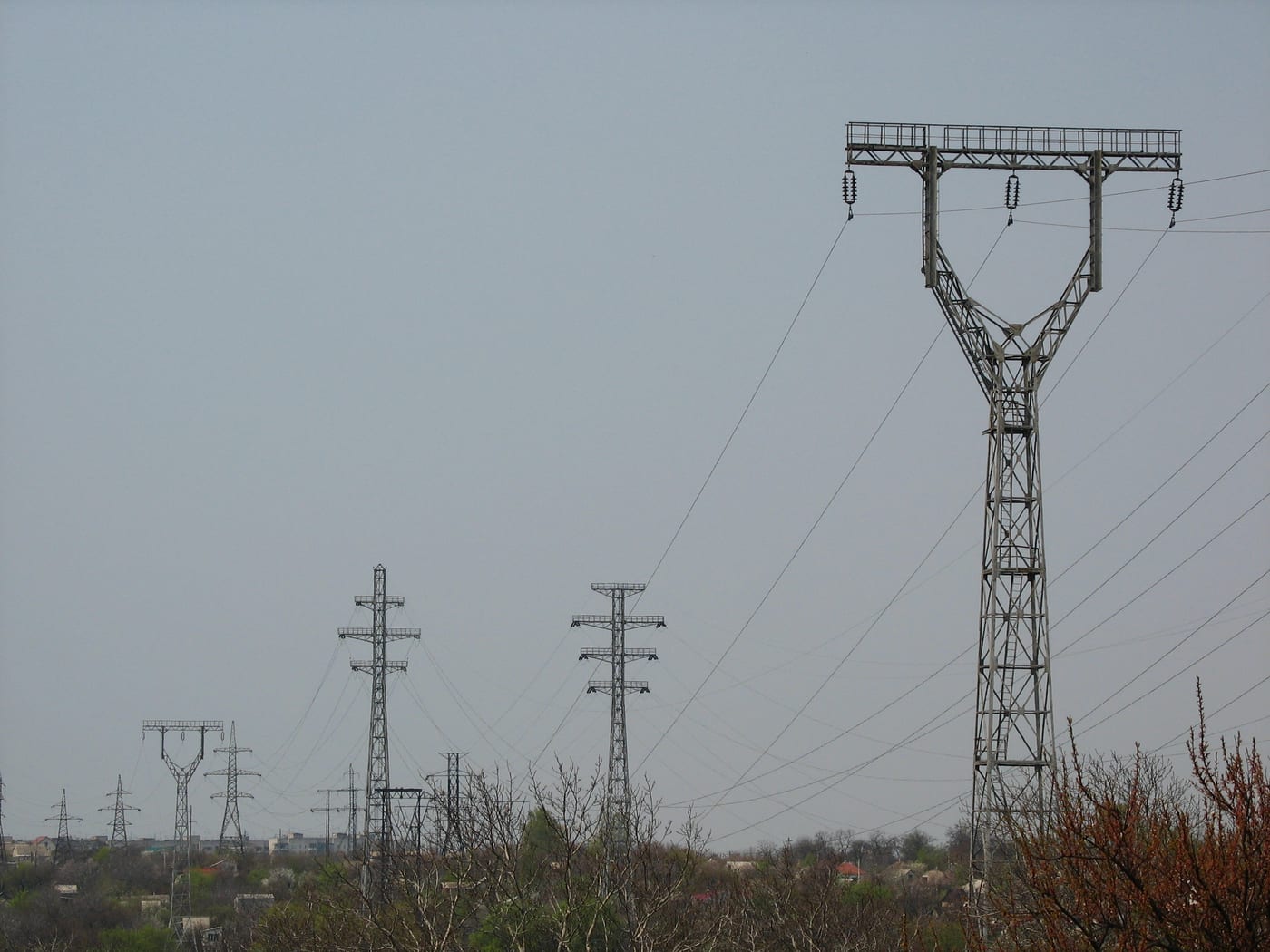
Image: Novoklimov, CC BY 4.0, via Wikimedia Commons.
A UPS is not just a big battery
A UPS is commonly understood as “something that holds things up when the grid drops”. In fact it does three jobs at once: regulate voltage, filter noise, and switch. Voltage sag, frequency drift and harmonic pollution all get stopped outside the room.
Three mainstream topologies, and they differ a lot:
| Topology | Path during normal operation | Transfer time | Typical use |
|---|---|---|---|
| Standby (offline) | straight from the grid; inverter only on outage | a few to tens of ms of gap | homes, single PCs |
| Line-interactive | from the grid, with automatic voltage regulation | a few ms | small server rooms |
| Double-conversion (online) | rectified then inverted always; battery on the DC bus | no interruption | data centers |
Double-conversion means the grid is rectified to DC and then inverted back to AC. The server always runs on the inverted output, so it does not matter whether the grid drops or wobbles. The cost is lower efficiency (typically 92–96%) and more heat to remove.
Batteries are a separate subject. Valve-regulated lead-acid (VRLA) is cheap and mature but bulky and short-lived — replacement every three to five years. Lithium takes less space and lasts more cycles, but costs more, and thermal runaway has to be managed specifically, which is why fire requirements for lithium UPS rooms are far stricter than for lead-acid.
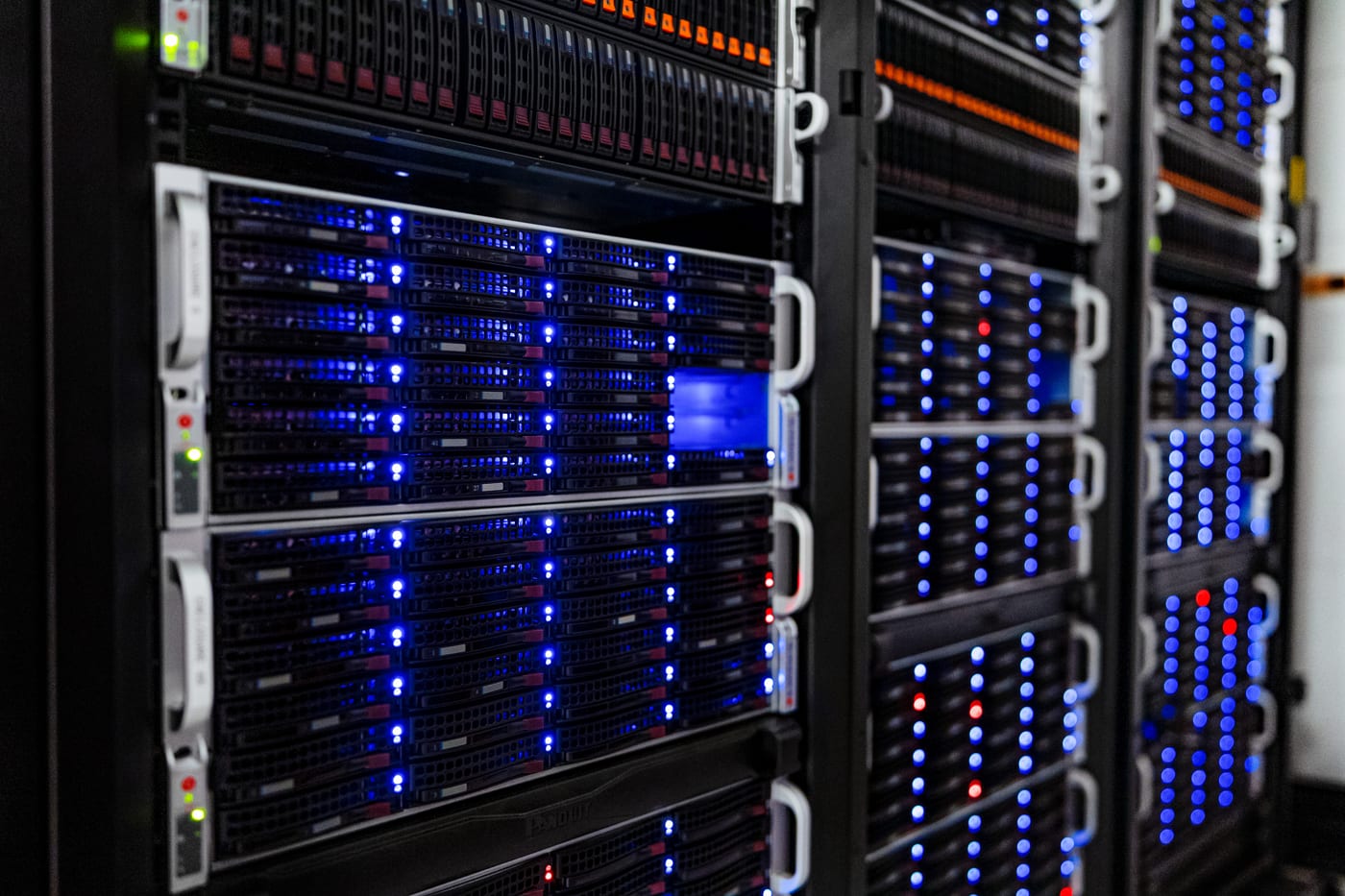
Image: NOIRLAB / NSF / AURA, CC BY 4.0, via Wikimedia Commons.
Diesel generators: why ten seconds
UPS batteries hold for minutes, not hours — their job is to bridge until the generator takes over, not to carry the load.
So the emergency timeline looks like this:
- The grid fails; the UPS takes over instantly, zero transfer;
- The automatic transfer switch (ATS) detects the loss and signals a start;
- The generator cranks, comes up to speed, builds voltage, closes its breaker — and is normally required to carry load within 10 seconds;
- If it fails to start in time, the batteries keep discharging until they are flat. That is a real outage.
The ten-second figure is not arbitrary; it comes from how long a battery can economically hold the load. Among the reasons generators fail to start, the most common are no fuel and never tested: a standby generator that has not run in months has a flat starter battery, degraded fuel and air in the fuel lines. Load-bank testing on a schedule is a hard requirement, not a nice-to-have.
2N and N+1: two spellings of redundancy
The terms get mixed up, but they mean different things:
- N+1: need N units, install N+1. One can fail and capacity remains — but every unit shares the same distribution path;
- 2N: two fully independent systems of N units each. Either side can carry the whole load on its own.
The key phrase in 2N is “fully independent” — two feeds from different substations, two transformers in different rooms, two UPS chains on different cable trays. If both feeds actually come from the same substation, the 2N exists only on paper.
There are also 2N+1 (a spare on each side) and N+2 variants. They are all points on the curve between “how much more do we spend” and “how many simultaneous failures can we absorb”.
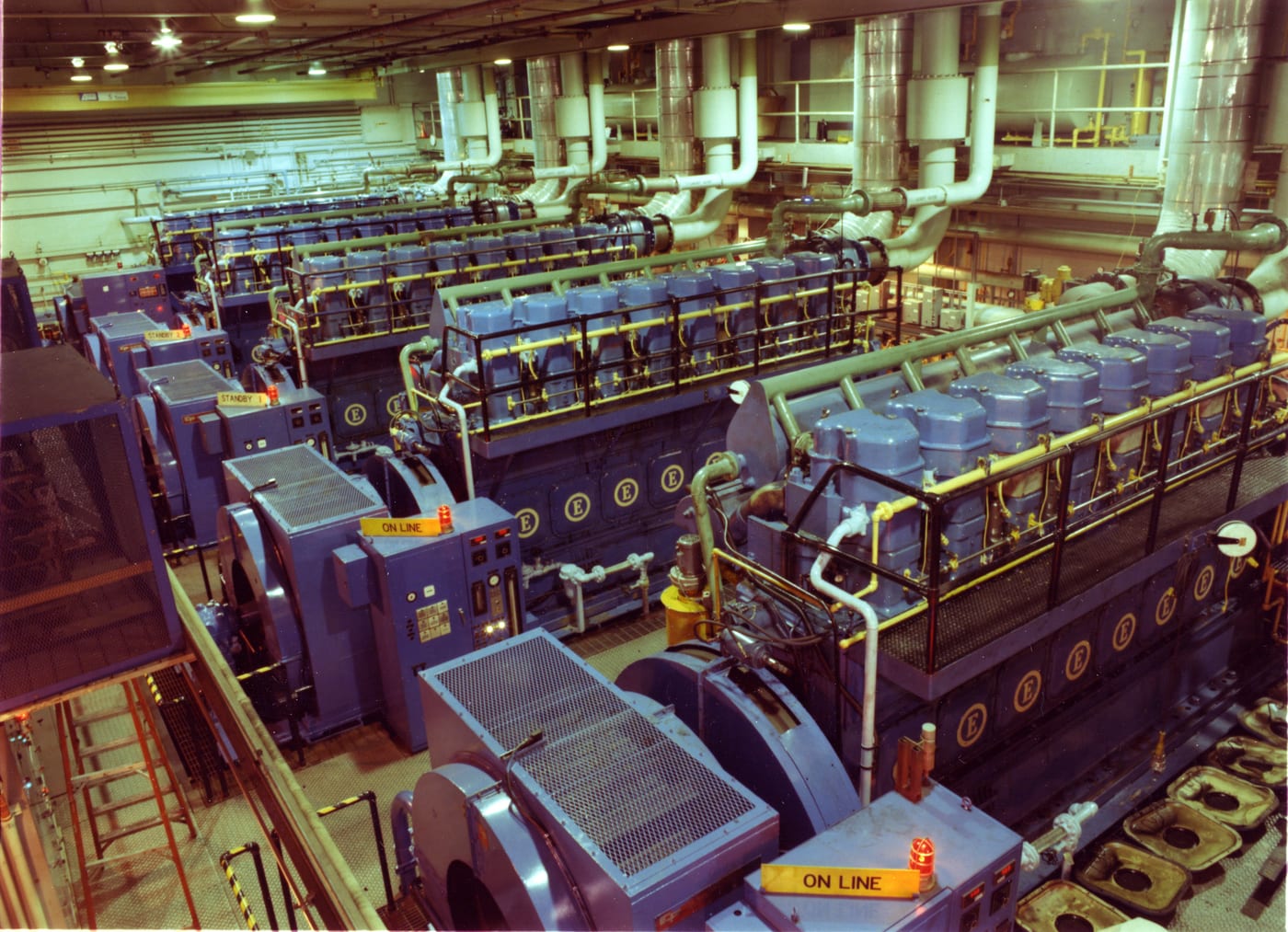
Image: public domain, via Wikimedia Commons.
PUE: a metric that gets gamed
PUE = total facility power / IT equipment power. The ideal is 1.0, meaning every watt reaches a server.
Industry average is around 1.5–1.6; hyperscale self-built facilities reach roughly 1.1. It looks like a clean health metric, but its definition is easy to bend:
- What goes in the numerator? Office space, parking lighting, campus irrigation — are they counted?
- When was it measured? Winter readings (free cooling, chillers mostly off) look far better than summer ones;
- At what load? At half load, fixed losses in cooling and distribution are a larger share, so PUE looks worse. A number measured at low load is not comparable.
So when you read “our PUE is 1.1”, the questions are: annual average or a single point? At what load? What was included?
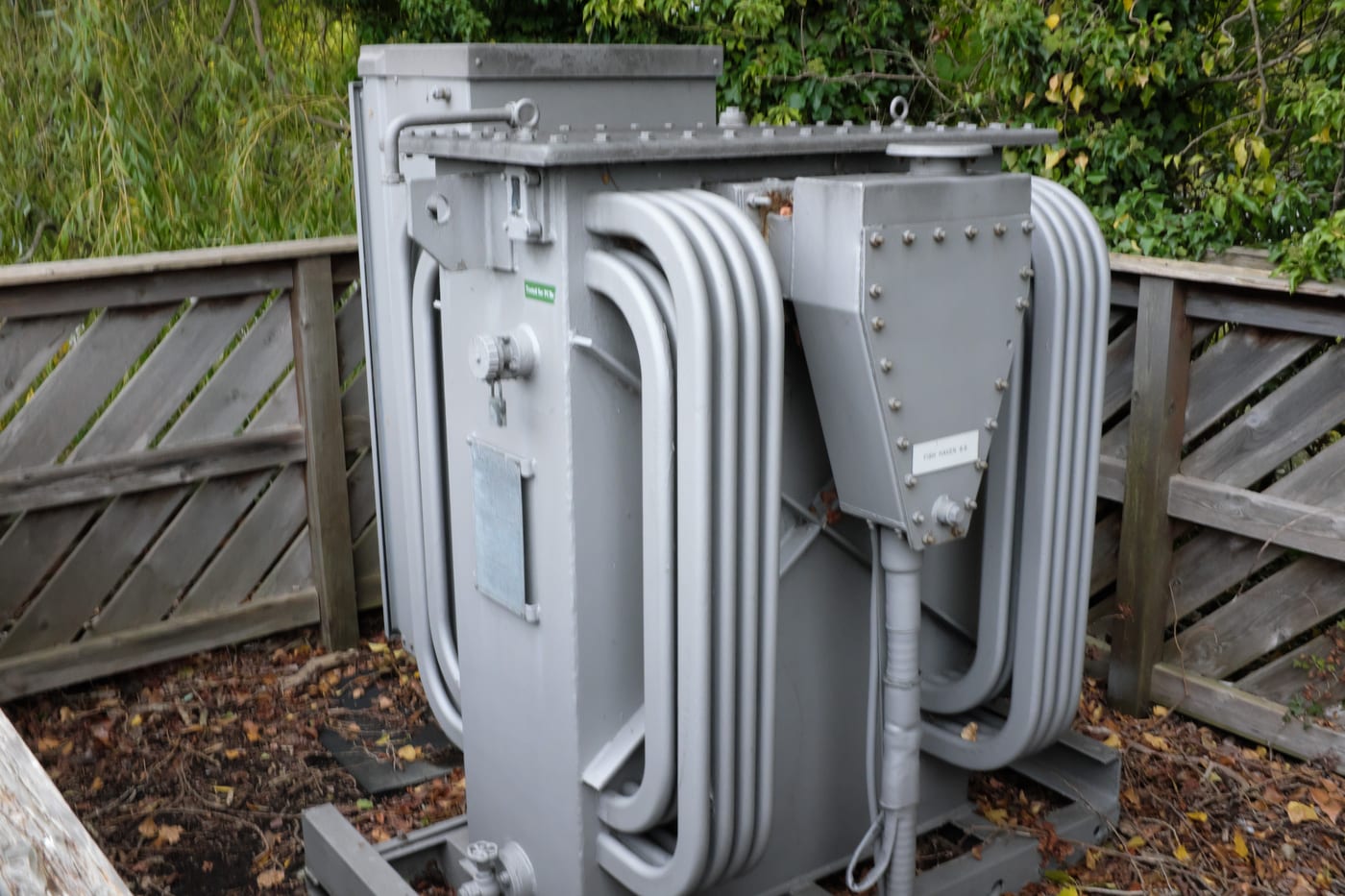
Image: Bob Harvey, CC BY-SA 2.0, via Wikimedia Commons.
My take
Data center power is logically simple: nothing may exist only once. What is complicated is that applying that principle at every layer multiplies cost and construction effort.
If I had to rank priorities for a self-built facility:
- Do the 2N utility feeds first. If that layer fails, every redundancy behind it is meaningless;
- Choose double-conversion online UPS. Do not save money on topology;
- Put scheduled load-bank testing of the generators in writing. What defeats standby power is not equipment quality, it is that nobody ever tested it;
- Ignore the advertised PUE number until you know your own load curve and cooling method.
As for “never losing power”: within a sane budget, that is not achievable. What is achievable is knowing what happens when it goes, and how long recovery takes.
Comments
…